

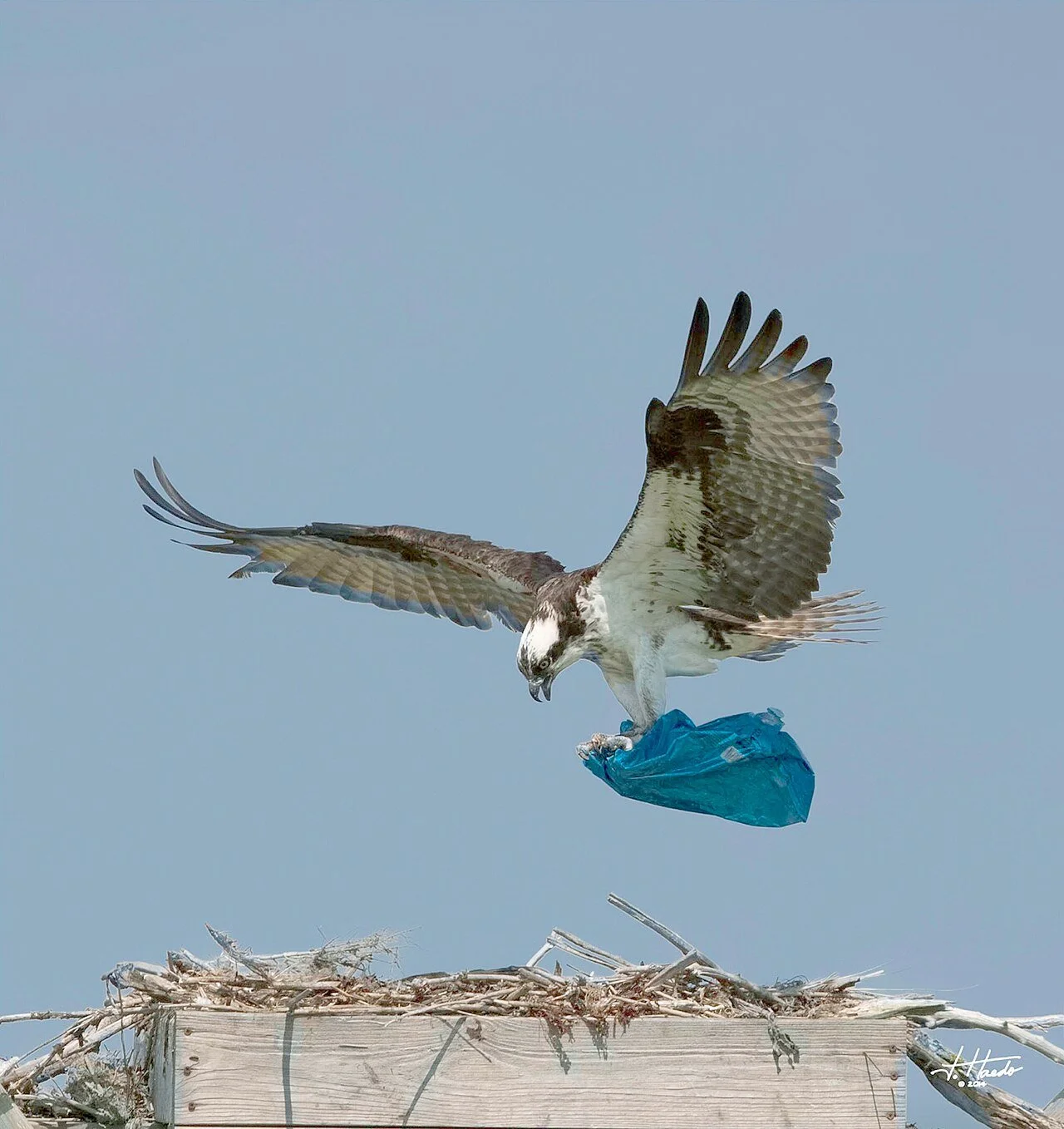
THE OSPREY
ARE STARVING
Not because the birds failed.
Because the fish did not come back.
What we’re seeing right now
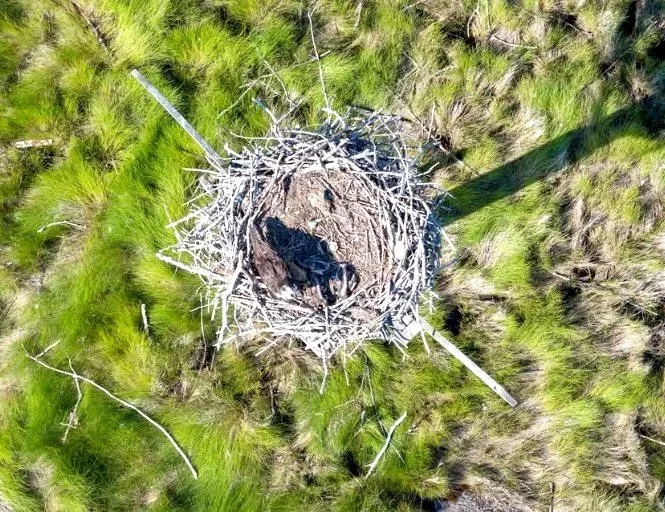
Navesink River: 25 sites surveyed. 19 occupied. 12 active with eggs or young.
10 nests held 22 nestlings.
None known to survive.
Shrewsbury River: 26 sites surveyed in August. 16 had nests.
Local nest monitors say that 3 fledglings have been seen.
13 adult osprey counted on the Navesink in August.
Not one was seen feeding, diving on, carrying a fish, or interacting with fish of any kind.
Statewide, the 2025 NJ Osprey Project Report found the same pattern: a 56% decline in young produced from the recent 5-year average, and 57% of active nests failed to produce young at all.
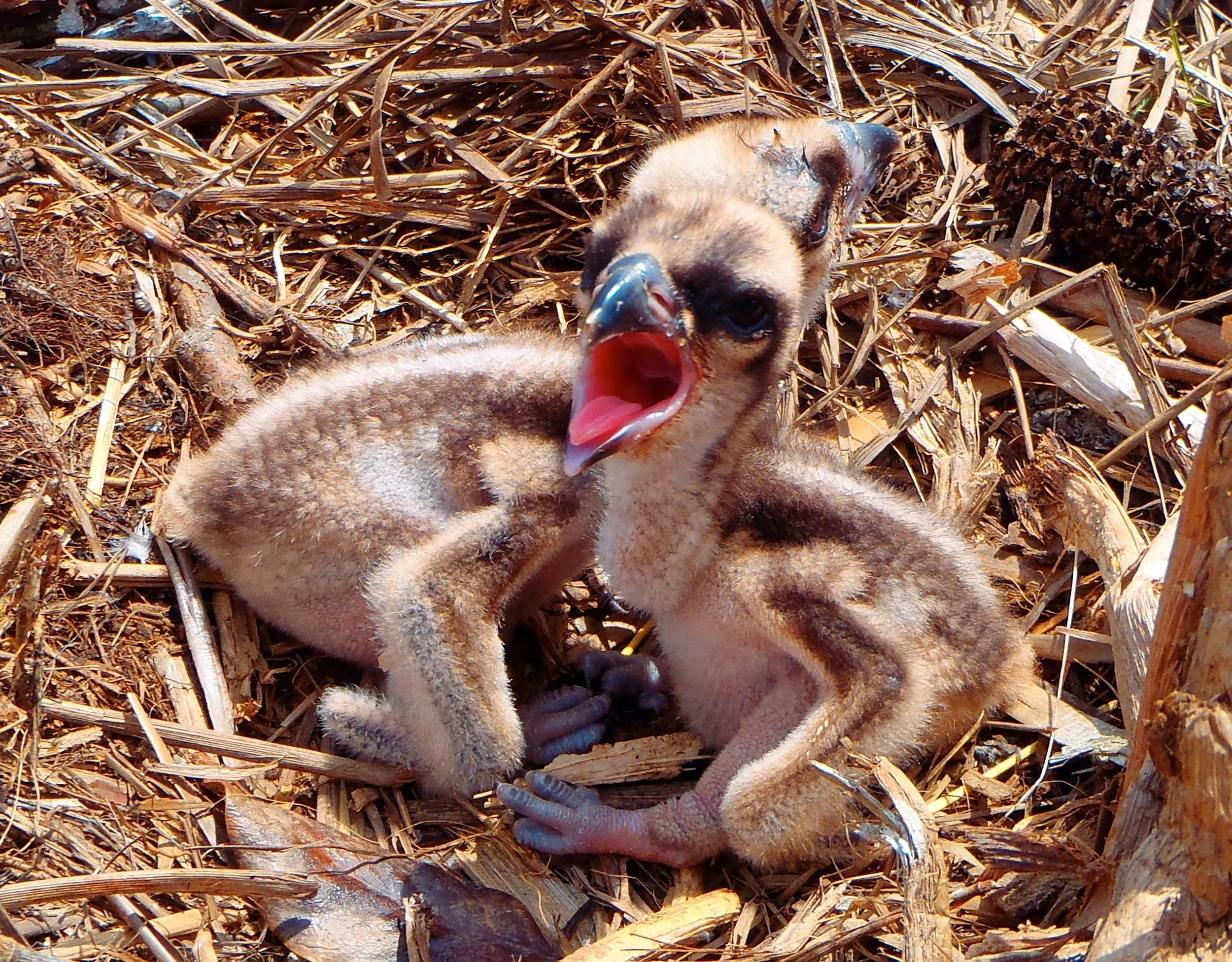
Twenty-two chicks hatched on the Navesink. Zero lived to fly.
The photograph here shows a dead osprey. It is hidden by default.
We are not putting it in front of anyone who does not choose to look.
But this is what the end of the story looks like, and we think the people deciding how many menhaden come out of the water should have to see it.

The same story everywhere the bunker left
Five years ago, during the height of migration: 10 to 30 bald eagles a day, feeding on the adult menhaden that filled the Raritan River.
The last two years: zero adult menhaden in the Raritan.
Only the resident, non-migratory eagles remain, about four birds total, on a stretch that used to hold dozens of migrants a day.
For 15 years, Paul has also tracked something else on these rivers each spring: a die-off among the largest, oldest menhaden, a Vibrio-driven “spinning disease” that state biologists eventually confirmed.
The die-off has not happened the last three springs. Not because the fish got healthier. Because there are barely any big, old menhaden left in the rivers to die.
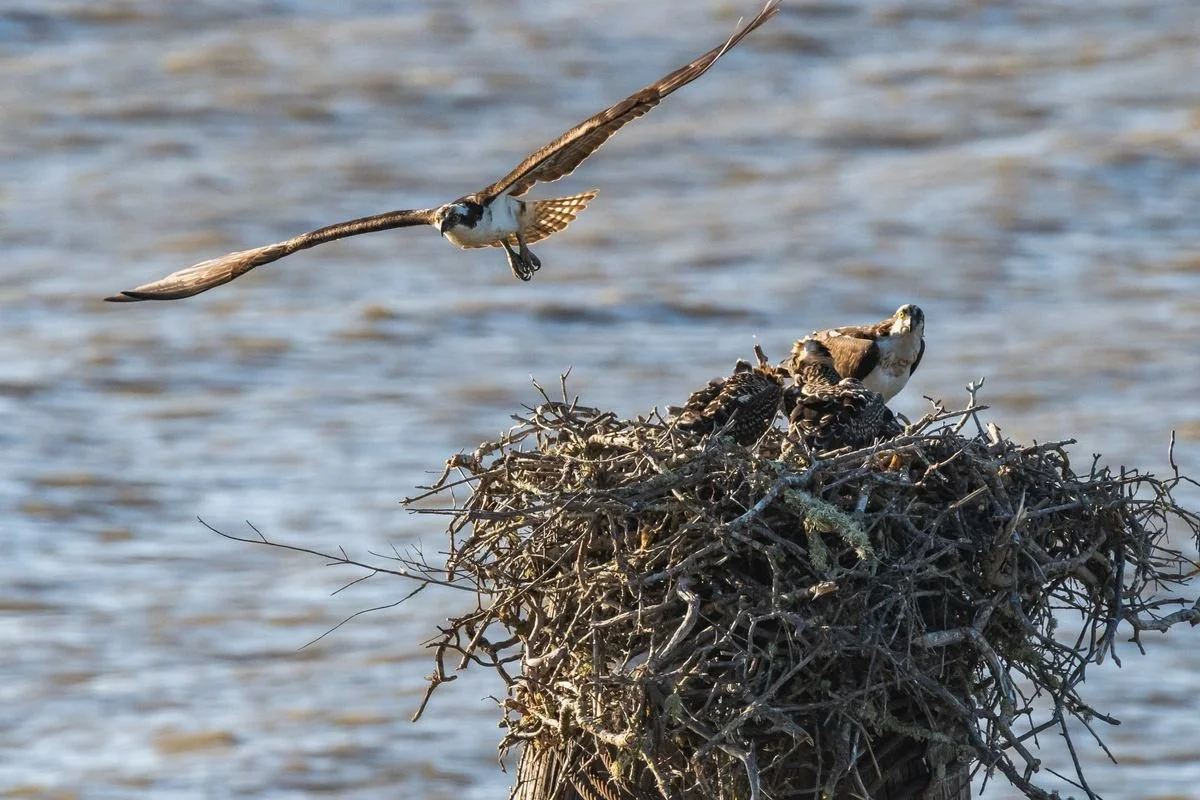
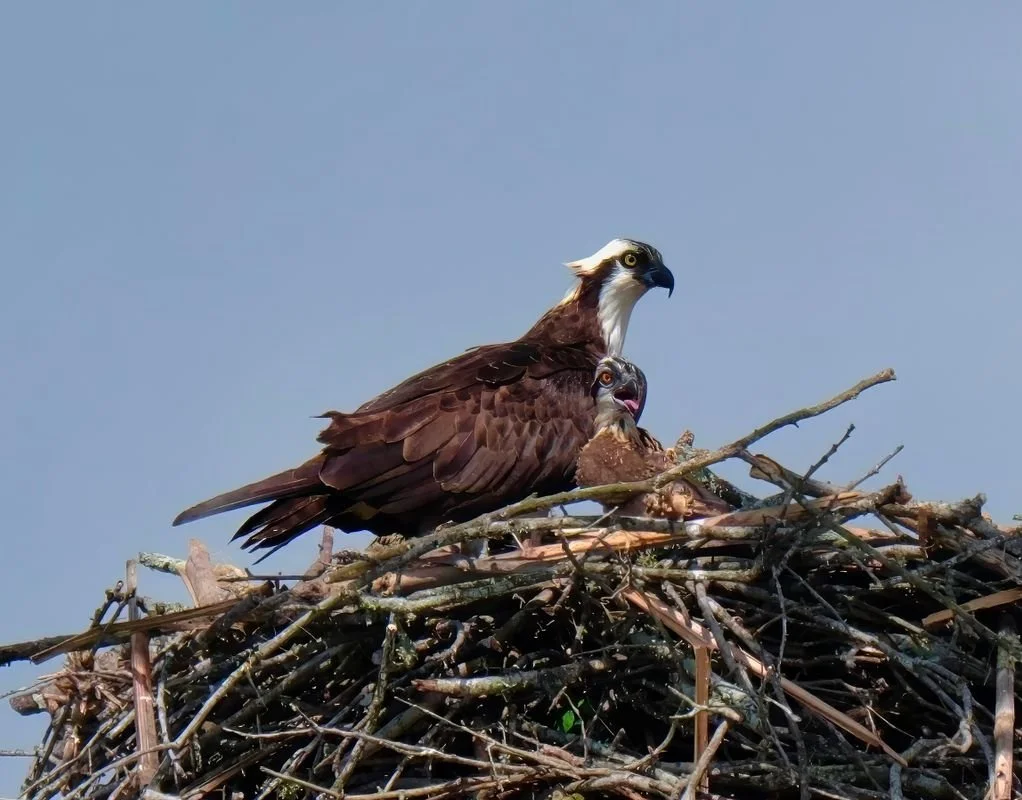
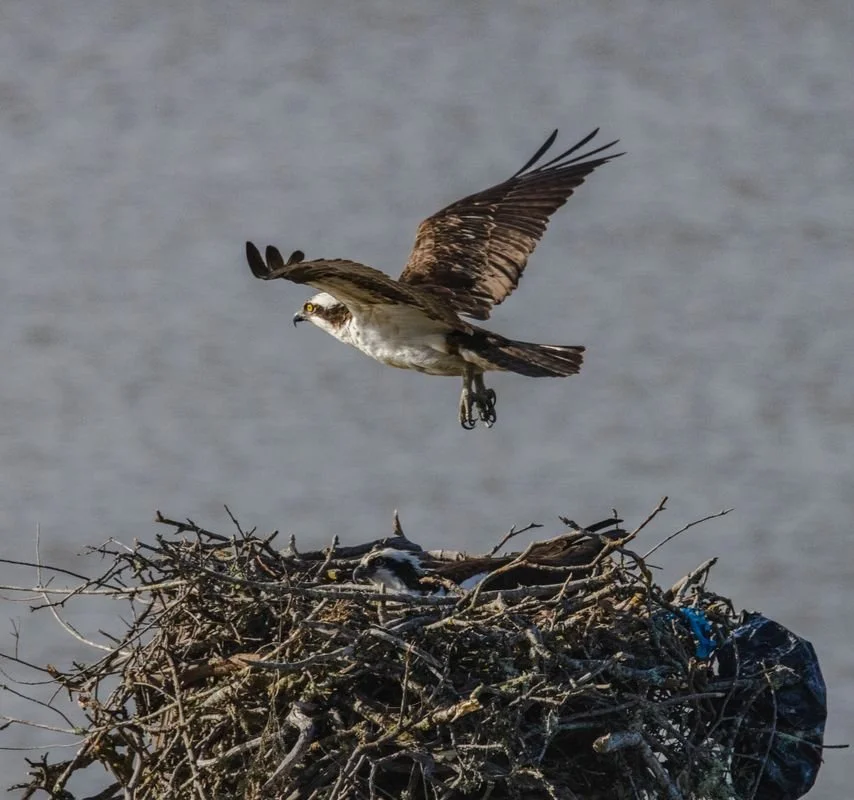
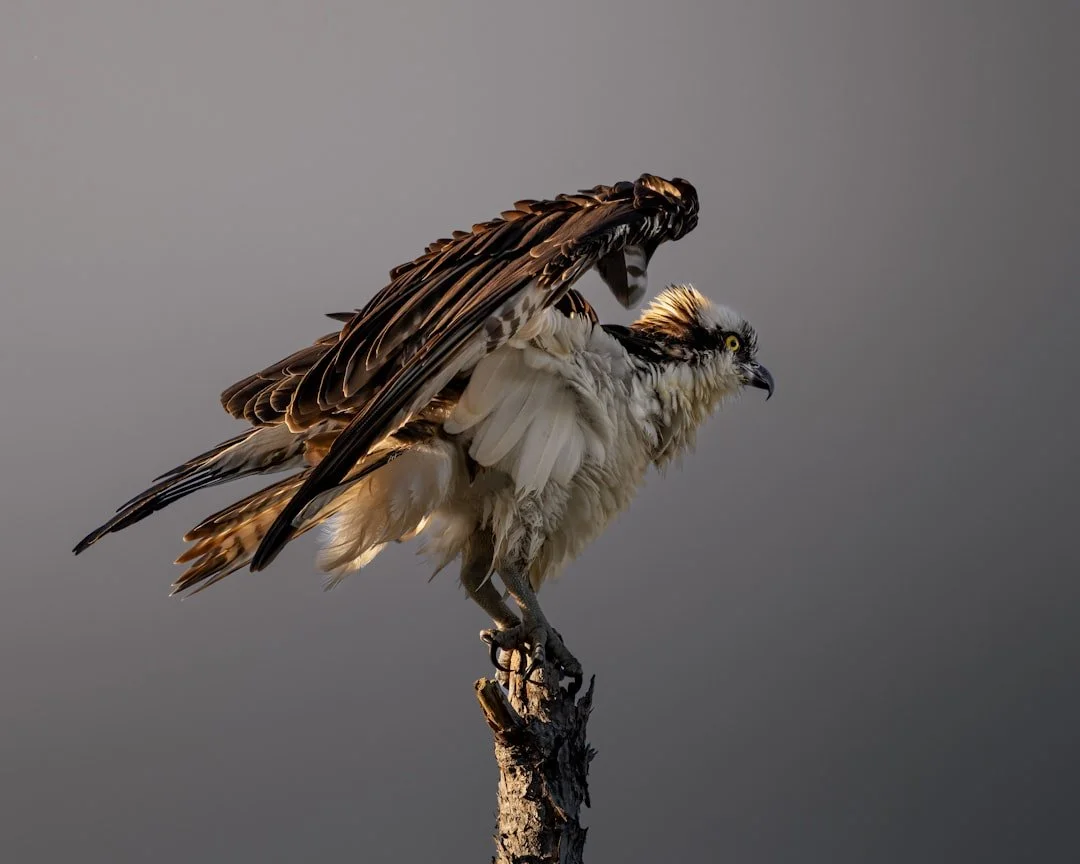
This isn’t a guess.
It’s what happens when the fish disappear.
THE BIRD IS A GAUGE
"As a group of scientists who have studied osprey for a combined total of approximately 133 years, we contend that osprey are likely the most appropriate bird species for quantitative study of menhaden abundance."
Paul R. Spitzer, PhD; Alan F. Poole, PhD, Cornell Lab of Ornithology; and Richard O. Bierregaard, PhD, Academy of Natural Sciences, Drexel University. Letter to the Atlantic States Marine Fisheries Commission, 2015.
An osprey eats one thing: fish it catches itself, that day, within a few miles of its nest.
No stockpiling. No switching to grain. No supermarket.
That makes it the most honest instrument on the water. And it makes it readable. As those three scientists put it, a menhaden is "all field mark" in an osprey's talons: blunt head, yellow forked tail, unmistakable even from shore, even at a distance. You do not need a boat or a net to take the measurement. You just need to watch the bird.
In the Connecticut River estuary, they measured what those birds were carrying home.
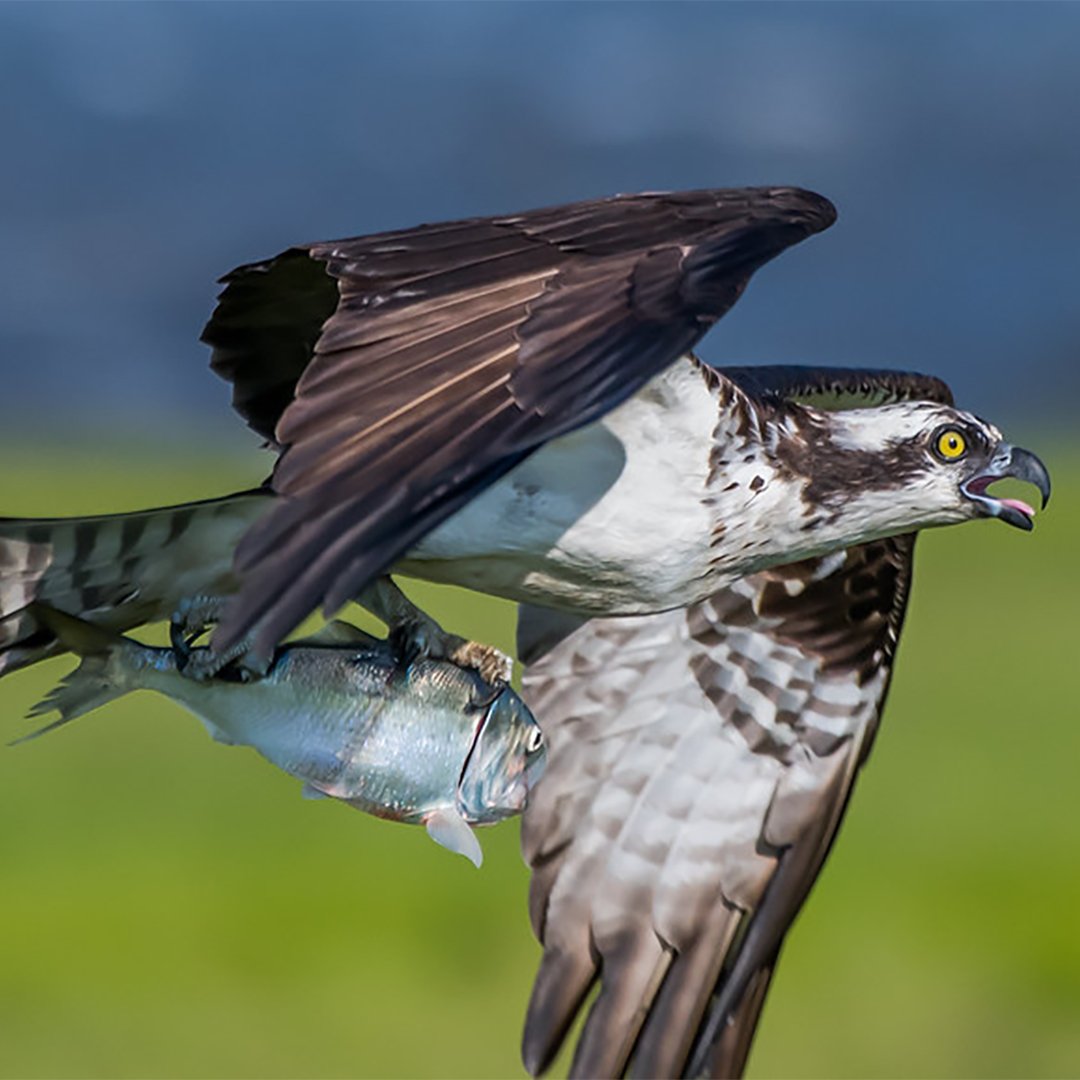
98-99%
of all prey delivered to osprey nests in the Connecticut River estuary was menhaden.
That is not a bird with options.
That is a bird with one food.
So when the nests go quiet up and down the Atlantic coast, we are not looking at a bird problem. We are reading a gauge. And the needle is on empty.
THE SCIENCE JUST CAUGHT UP
For years, the people who fish these waters said the ospreys were starving and were told it was anecdotal. In June 2026, a team led by Bryan Watts at the Center for Conservation Biology published the numbers.
They monitored 571 osprey nests across 12 study areas in the Chesapeake Bay, and they did something clever: they compared the salty, menhaden-dependent parts of the Bay against the low-salinity upper reaches, where ospreys can still catch catfish and gizzard shad instead.
Same bay. Same birds. Same summer.
One difference: whether there was anything to eat.
571 osprey nests · Chesapeake Bay · 2024
| Menhaden-dependent Bay | Alternative prey available | |
|---|---|---|
| Young raised per pair | 0.51 | 1.36 |
| Nest success rate | 33.1% | 65.5% |
| Pairs that raised nothing at all | 66.9% | 34.5% |
| Chick survival after hatching | 0.47 | 0.84 |
| Pairs that lost a chick after it hatched | 64.1% | 25.0% |
An osprey population needs 1.15 young per pair just to hold steady.
Watts et al. (2026), Widespread reproductive deficits in Chesapeake Bay ospreys, Frontiers in Marine Science.
An osprey population needs 1.15 young per pair simply to hold steady. Not to grow. To break even.
The menhaden-dependent Chesapeake produced 0.51
The long view is worse. At four sites monitored continuously since the 1980s, productivity fell from 1.57 young per pair to 0.46, a 71% decline. The share of pairs that did not even bother to lay eggs rose from 1.8% to 41.8%.
In the study areas alone, researchers estimate roughly 5,500 young were lost in 2024.
The birds are not failing to hatch. They are starving after they hatch.
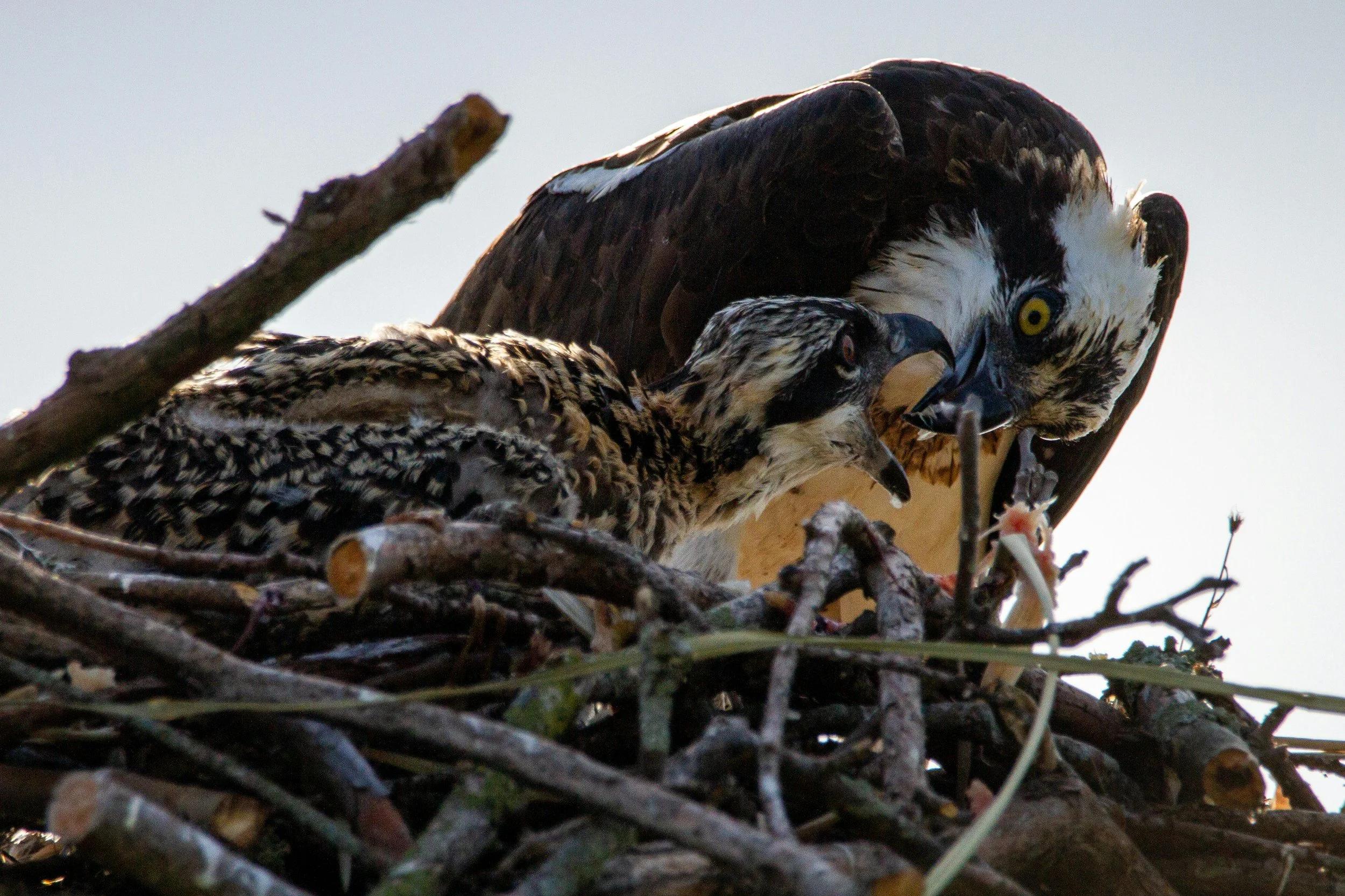
And it’s getting worse every year. 0.51 young per pair in 2024. 0.35 in 2025. Just 0.25 in 2026, the worst season ever recorded. Same story every year: no fish, no chicks.
This distinction is everything, and it is what separates this crisis from the last one.
DDT thinned eggshells. Eggs broke. Clutches never hatched.
That was the 1960s and 1970s, and we fixed it.
What is happening now is the opposite pattern. The eggs hatch fine. Then the smallest chick starves, then the next one, because the male cannot carry home enough food. Biologists have a clinical name for it: brood reduction.
Alan Poole described the mechanism in a 1982 paper. Forty-four years later, Bryan Watts's team measured it happening across 571 nests at once.
We have known exactly how this bird starves since 1982. We are now watching it happen at scale.
Watts, B.D., Hines, C., Byrd, M.A., Lukei, R.F. Jr., Paxton, B.J., Duval, L., Spiewak, K.E., Kearns, G.D., Day, D.D., and Rattner, B.A. (2026). "Widespread reproductive deficits in Chesapeake Bay ospreys." Frontiers in Marine Science. doi.org/10.3389/fmars.2026.1685158
It already worked once
Here is the part of this story that almost nobody tells, and it is the part that matters most.
We have already run this experiment. We know it works.
Gardiners Island, New York. From Alexander Wilson's visit in 1803 until about 1950, this one island supported 300 osprey nests, probably the densest concentration of ospreys ever recorded anywhere on earth.
Through the low-menhaden years of the 2000s, it held 18 to 28 active nests. Researchers documented what they described plainly as "massive starvation of nestlings, resulting in complete nest failures or small brood sizes." Reproduction sat right at the edge of replacement.
Then, in 2012, the Atlantic States Marine Fisheries Commission finally capped the menhaden harvest.
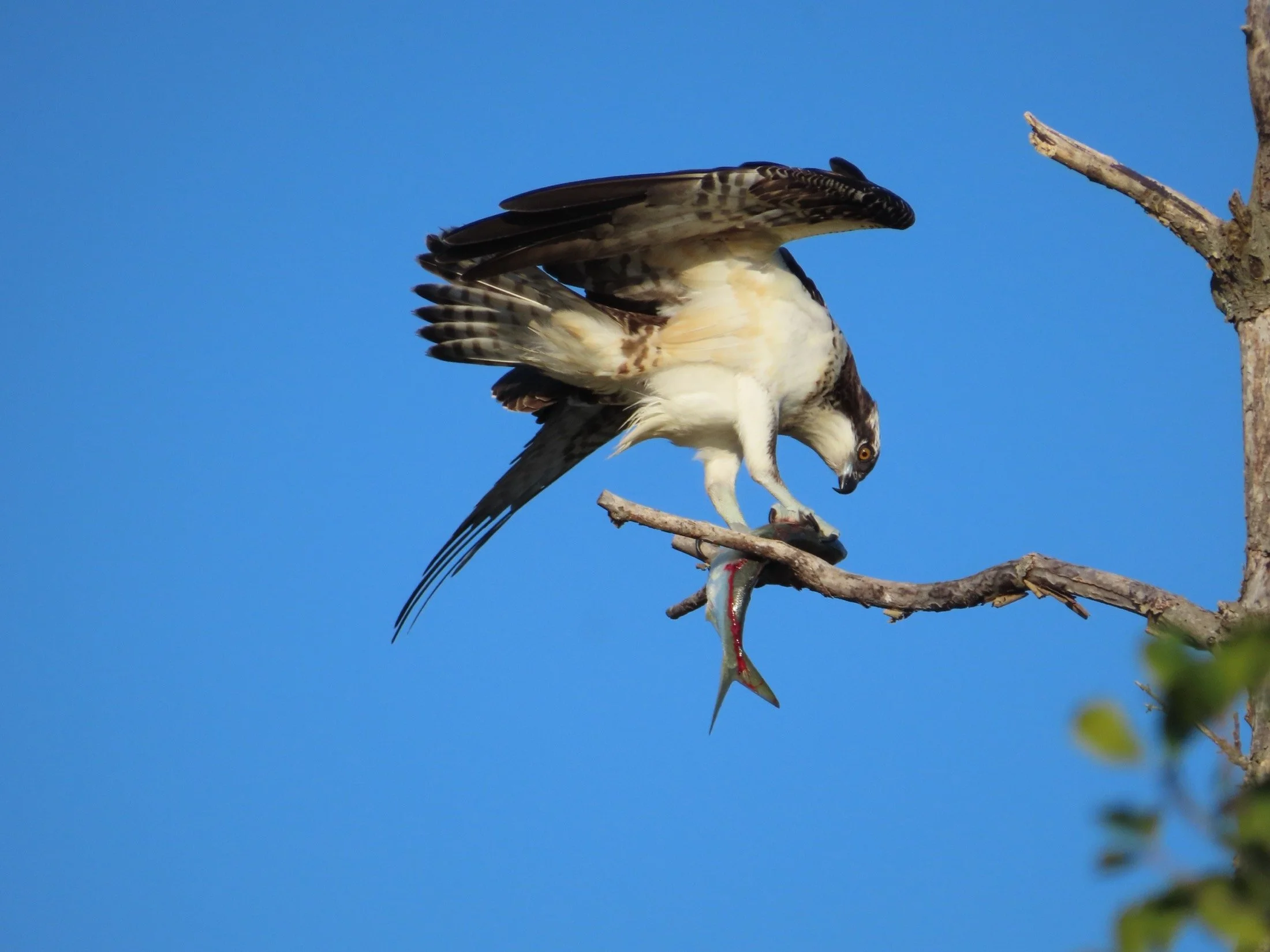
60 nests, 65 young
Gardiners Island in 2013 and 2014,
the two seasons after the harvest cap took effect.
Back above replacement rate.
South Cove, Old Saybrook, Connecticut
The same two summers, in the Connecticut River estuary, observers watched 20 to 30 ospreys hunting simultaneously, all day long. The menhaden ran until at least mid-October.
The scientists watching it wrote that an osprey feeding event of that abundance and duration was "unrecorded in a century of extensive observation."
Not unusual. Not impressive. Unrecorded. Nobody had seen anything like it in a hundred years of looking.
Leave the fish in the water, and the birds come back. Not in a generation. In two seasons.
There is a controlled version of this too. In 2023, researchers in the lower Chesapeake simply gave supplemental fish to osprey nests and measured what happened. Reproductive performance went up.
A feeding trial in the lab and a harvest cap in the ocean. Two completely different methods, one answer: these birds are not sick, or poisoned, or crowded out.
They are hungry, and it is fixable.
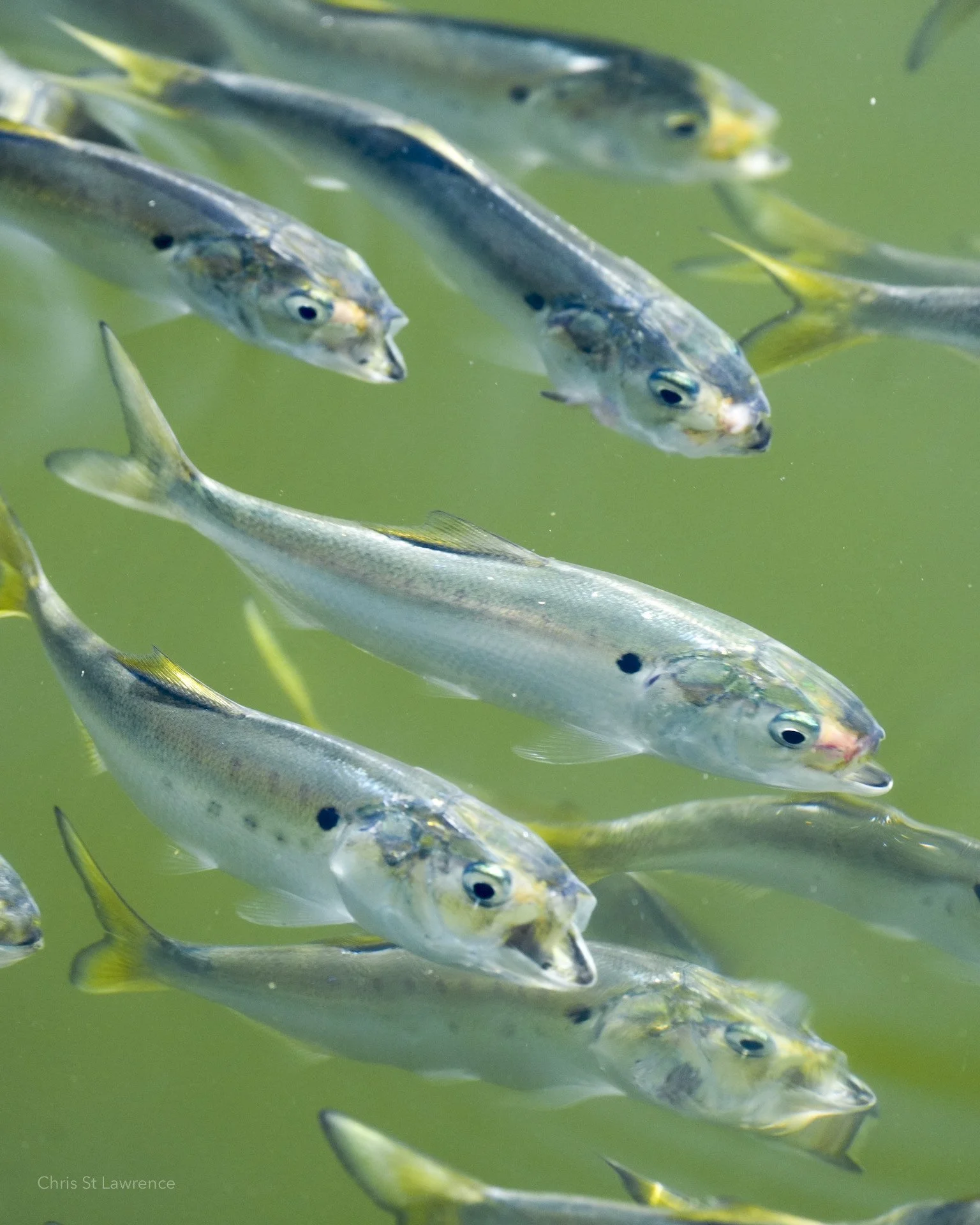
WHAT IT ISN'T
Every time that we see posts about starving ospreys, the same handful of explanations come back in the comments.
Some are asked in good faith. Some are not.
All of them deserve a real answer, so here they are, with sources.
“There’s no shortage. There are plenty of menhaden.”
Start with what the Commission actually did in October 2025. It cut the 2026 coastwide catch limit by 20 percent, to 186,840 metric tons.2
Now look at what the fishery already caught. Landings in 2024 were 186,155 metric tons.3
The difference between the new limit and last year’s actual catch is 685 tons, about four tenths of one percent. The cut lands almost exactly where the fleet already was. Whatever else it is, it is not a restriction.
On abundance, be careful about what the Commission is and is not saying. Its 2025 assessment update put the time-series average of age-1+ biomass 37 percent lower than the 2022 update had. But ASMFC attributes that to a revised estimate of natural mortality rather than a sudden crash, and by its own reference points the coastwide stock is not overfished, and overfishing is not occurring.1
Read further on the same page, though. Fishing mortality in 2023 sat at 1.69 times the ecological target, and egg production sat at 71 percent of its target.1 Passing the threshold test is not the same as hitting the goal.
Coastwide averages are not what an osprey eats.
A bird hunting the Navesink in July cannot fly to a coastwide average. It needs fish in that river, in that month, at a size it can carry back to the nest. Localized depletion is invisible to a coastwide number, and it is the specific problem researchers have flagged in the lower Chesapeake.7
Watch it happen at the nest. In 1985, menhaden made up 67.3 percent of what Chesapeake ospreys ate. By 2021 it was 30.2 percent, having fallen as low as 24.7 percent in between. The rate at which menhaden actually arrived at nests dropped 83.3 percent.8
The coastwide stock is judged not overfished. The fish stopped arriving at the nest anyway. Both are true, and only one of them feeds a chick.
“Omega says there are plenty of menhaden in the Chesapeake Bay. Then why are they going to NJ and NY?”
A follower, on our Facebook page.
“The fish just moved north. It’s a distribution shift, not a decline.”
The 2026 study compares osprey nests inside the same bay, in the same season, roughly thirty miles apart. A coastwide northward shift cannot explain why one group of nests fledged 1.36 chicks per pair while the other managed 0.51.4 The variable is not latitude. It is what is available to eat.
Connecticut is the control case, and it cuts both ways. In 2024, Connecticut Audubon’s Osprey Nation counted 726 active nests and 1,077 fledglings, both records for the project, at 1.48 fledglings per active nest.5 Not because the menhaden moved there, but because Long Island Sound still offers a diverse forage base. Several species, not one.
Their own report draws the comparison for us: the 2024 breeding success in Connecticut “stands in sharp contrast to the results in parts of Chesapeake Bay, which suffered widespread nest failures and should serve as a caution for Connecticut.”5
The Chesapeake has been narrowed to a single fish. That is the difference.
“Bald eagles are killing the osprey chicks.”
Researchers put cameras on more than 50 osprey nests and collected over one million images. Bald eagles did not appear in a single one.4
The parts of the Bay with fifteen times greater bald eagle density had more than double the osprey productivity. More eagles, more osprey chicks. The correlation runs backwards from the claim.
Worth adding: the scientists who pioneered the biomonitor framework describe bald eagles as fellow menhaden dependents, not osprey predators.6 Eagles take menhaden from near the surface without diving. They are in the same boat, eating the same fish, facing the same shortage.
“It’s pollution and contaminants, not fishing.”
This deserves a serious answer, because it used to be the right one.
But contaminants and starvation leave different fingerprints. DDT thinned eggshells: eggs broke, clutches failed to hatch. That is a hatching problem.
What is happening now is a feeding problem. The eggs hatch fine. Then 64.1 percent of pairs in the menhaden-dependent Bay lost at least one chick after it hatched.4 Legacy pesticides have declined for decades and are no longer at levels that suppress reproduction.
Of 159 ospreys admitted to rehabilitation facilities in 2024, 53 were diagnosed emaciated. Not poisoned. Starved.
“It’s the offshore wind turbines.”
The nest failures are concentrated in the high-salinity Chesapeake, where there is no offshore wind construction. The failures track salinity and prey availability, not turbine proximity.4
We will let one of our own followers take this one, because he said it better than we would.
“Everyone is too distracted with the windmills. These bunker boats are causing the real damage.”
A follower, on our Facebook page.
“It’s disease. Bird flu.”
Three dead ospreys collected in August 2024 were tested for both highly pathogenic avian influenza and West Nile virus. Both came back negative.4
Across all 159 osprey admissions to rehabilitation facilities in 2024, no infectious disease was diagnosed in a single bird.
“It was just a bad-weather year.”
In the researchers’ words: “During the 2024 nesting season the Chesapeake Bay did not experience exceptional weather events that would be expected to drive broad-scale brood failure.”4
For scale, weather accounted for roughly 5 percent of osprey nest failures between 1966 and 1979.
Weather cannot carry a 71 percent decline.
“Ospreys were delisted. They’re a conservation success story. They’re fine.”
True, and beside the point. The delisting reflects the recovery from DDT across the 1980s, 1990s, and 2000s. New Jersey upgraded osprey from threatened to stable-secure in January 2025, before this collapse was visible in the data.
Productivity in the menhaden-dependent Chesapeake in 2024 was below what was recorded at the height of the DDT era.4
The greatest conservation success story in American wildlife is being undone in real time, and this time there is no pesticide to ban. There is only a decision about how many fish we take out of the water.
“You can’t prove it’s the fish. Correlation isn’t causation.”
Fair challenge. So researchers ran the experiment.
In 2021, in Mobjack Bay, they picked osprey nests and hand-delivered menhaden to half of them, roughly 470 grams every three and a half days, from hatching until the chicks were six weeks old. The other half got nothing. Same bay, same season, same weather, same eagles, same contaminants.7
Fed nests: 13 of 16 succeeded, at 1.13 young per nest. Unfed nests: 5 of 15 succeeded, at 0.47 young per nest.7
The fed birds landed within a whisker of the 1.15 replacement rate. The unfed birds landed almost exactly where the whole high-salinity Bay now sits.
The only variable was fish. The authors’ conclusion: current menhaden availability is too low to support a demographically stable osprey population.7
The long record says the same thing. Between 1974 and 2021, while the menhaden index swung more than thirty-five-fold, osprey reproductive rate fell, the number of fish delivered to nests fell, and the share of menhaden in the diet fell. Somewhere in the early 1990s the population crossed from producing a surplus to running a deficit.8
“The Commission already accounts for predators. That’s what ecological reference points are for.”
They do account for predators. One predator.
When scientists built the original ecosystem model for Atlantic menhaden, it covered 61 trophic groups, sea birds and marine mammals among them. That model returned a finding that should have settled this: nearshore piscivorous birds were as sensitive as striped bass to how hard menhaden are fished. Both responded the same way to increased pressure.1011
Then the model used to actually set the reference points cut those 61 groups down to 17. Birds were not among the 17.9
Striped bass became the single indicator, and the reference points were built on one trade-off: how much menhaden fishing striped bass can withstand. The paper is candid about what happened to everything else. Reference points based on striped bass biomass, it says, “were assumed to also sustain other species.”9
Assumed. Not measured. Not monitored. Assumed.
That assumption has since been tested against the actual birds. The scientists who have counted Chesapeake osprey nests for fifty years concluded that current reference points, built on the food requirements of predatory fish, “are unlikely to protect the osprey population.”8
Search the Commission’s 2025 stock assessment update for the word “osprey.” It appears in none of its 142 pages. “Seabird” appears in none of them. The word “bird” appears exactly once, on page 142, in a list of things worth studying, under the heading Long term.1
“Striped bass” appears on six pages.
The osprey is not being managed badly. It is not being managed at all.
Sources
- ASMFC, 2025 Atlantic Menhaden Stock Assessment Update, October 2025. Biomass comparison and the role of natural mortality, p. 41. Stock status and reference points, pp. 5, 14, and 19. Read the assessment (PDF)
- ASMFC, Atlantic Menhaden Board Reduces 2026 TAC by 20% and Initiates Addendum for Chesapeake Bay Cap, 28 October 2025. Read the release
- ASMFC, Atlantic Menhaden FAQs, November 2025. Read the FAQs
- Watts, B.D., Hines, C., Byrd, M.A., Lukei, R.F. Jr., Paxton, B.J., Duval, L., Spiewak, K.E., Kearns, G.D., Day, D.D., and Rattner, B.A. (2026). “Widespread reproductive deficits in Chesapeake Bay ospreys.” Frontiers in Marine Science. doi.org/10.3389/fmars.2026.1685158
- Connecticut Audubon Society, Osprey Nation 2024 Season Report, 8 November 2024. Season totals and the ten-year table, p. 3. Read the report (PDF). Summary: A Good Year for Ospreys in Connecticut
- Spitzer, P.R., Poole, A.F., and Bierregaard, R.O., letter to the Atlantic States Marine Fisheries Commission, 2015.
- Academia, M.H., and Watts, B.D. (2023). “Food supplementation increases reproductive performance of ospreys in the lower Chesapeake Bay.” Frontiers in Marine Science. Experimental method, p. 3; results, p. 4. doi.org/10.3389/fmars.2023.1172787
- Watts, B.D., Stinson, C.H., McLean, P.K., Glass, K.A., Academia, M.H., and Byrd, M.A. (2024). “Demographic response of osprey within the lower Chesapeake Bay to fluctuations in menhaden stock.” Frontiers in Marine Science. Reference-point conclusion, p. 1; diet composition and delivery-rate decline, p. 5; source-to-sink transition, p. 5; required index value, p. 7. doi.org/10.3389/fmars.2023.1284462
- Chagaris, D., Drew, K., Schueller, A., Cieri, M., Brito, J., and Buchheister, A. (2020). “Ecological Reference Points for Atlantic Menhaden Established Using an Ecosystem Model of Intermediate Complexity.” Frontiers in Marine Science. Reduction from 61 to 17 groups and the choice of striped bass as indicator, p. 1; the assumption that other species would be sustained, p. 5. doi.org/10.3389/fmars.2020.606417
- Drew, K., Cieri, M., Schueller, A.M., Buchheister, A., Chagaris, D., et al. (2021). “Balancing Model Complexity, Data Requirements, and Management Objectives in Developing Ecological Reference Points for Atlantic Menhaden.” Frontiers in Marine Science. Composition of the full and reduced models, p. 5; finding that nearshore piscivorous birds were as sensitive as striped bass, p. 10. doi.org/10.3389/fmars.2021.608059
- Buchheister, A., Miller, T.J., and Houde, E.D. (2017). “Evaluating Ecosystem-Based Reference Points for Atlantic Menhaden.” Marine and Coastal Fisheries 9, 457–478. The original 61-group ecosystem analysis underlying the reference points. doi.org/10.1080/19425120.2017.1360420
IT WAS NEVER JUST THE OSPREY
The osprey is the bird we can count most precisely, which is why it leads this page. But it was never the only one at the table.
The same three scientists who called the osprey a menhaden biomonitor named four more species doing exactly the same job along this coast. Each one eats menhaden, in numbers, in public, where anyone paying attention can see it.
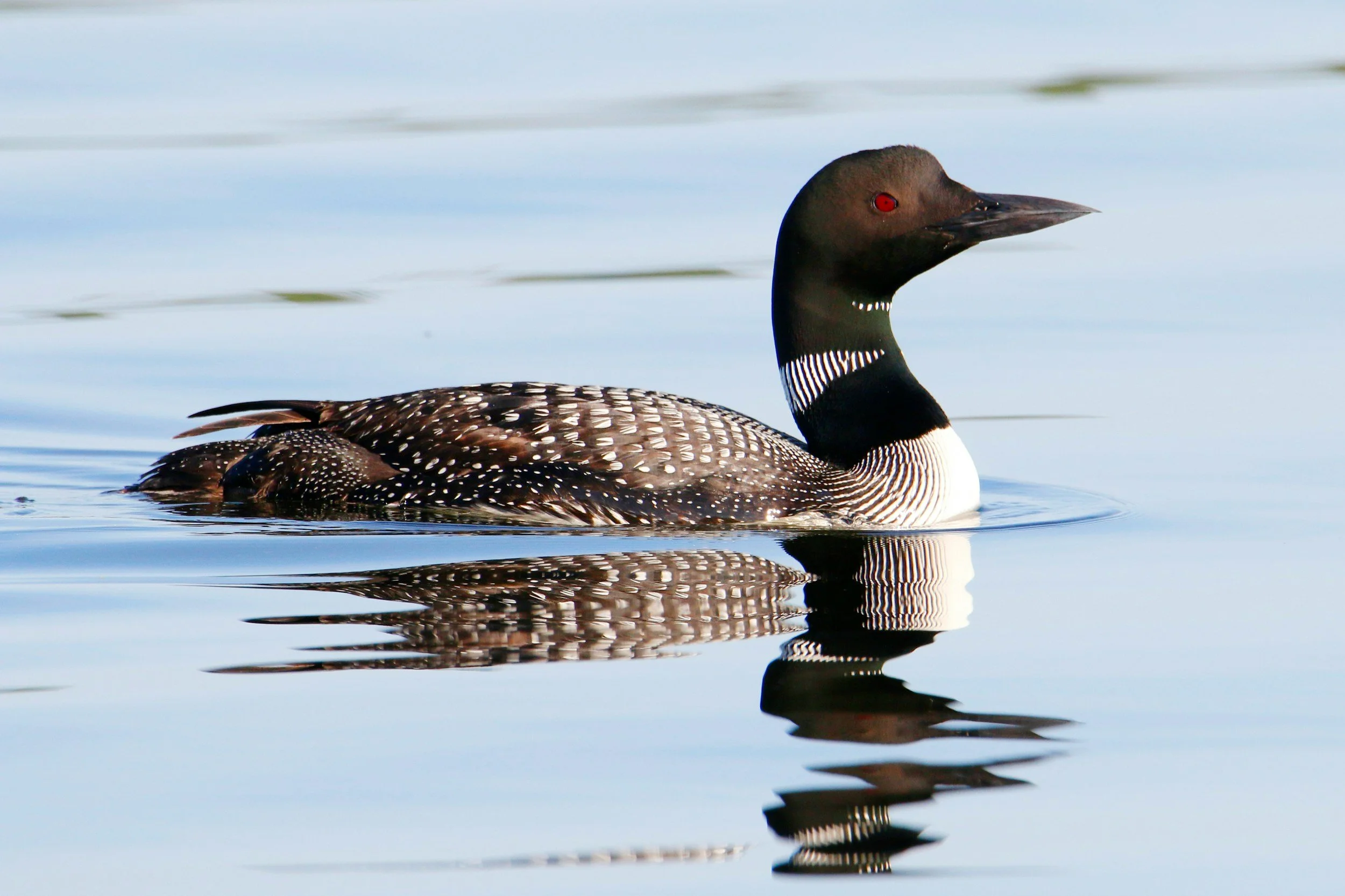
Common Loon. Every autumn they stage on the Chesapeake and form large, noisy flocks to feed cooperatively on peanut menhaden, from late October into November.
In November 2014, after the harvest cap took hold, Paul Spitzer counted 400 loons in a single tally, his best in twenty years. Audubon Christmas Bird Counts near Beaufort and Wrightsville Beach, North Carolina, have recorded hundreds and even thousands massing to intercept the same run.
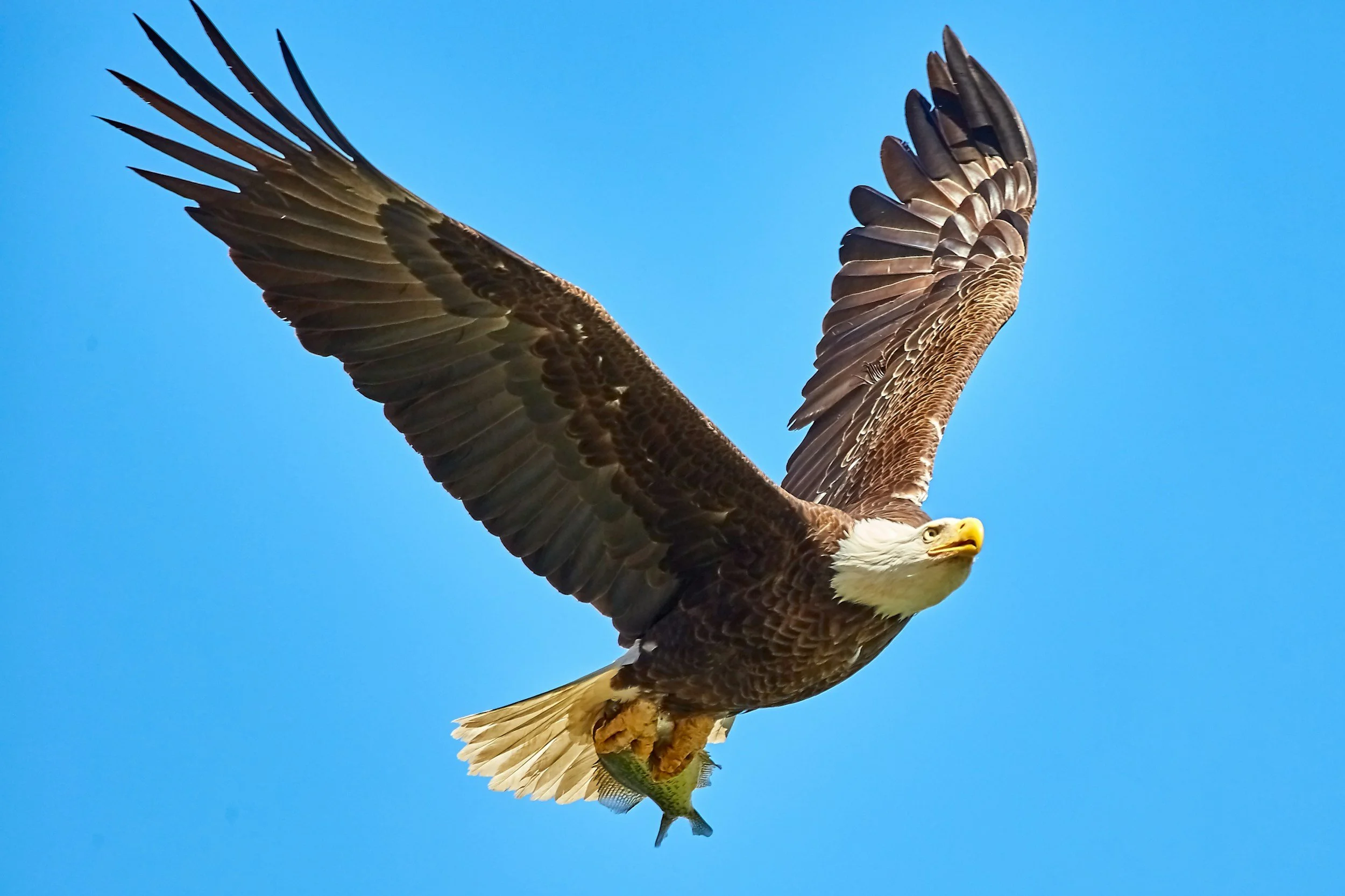
Bald Eagle. In late summer and early autumn, eagles gather at vantage points around the Bay to take menhaden from near the surface, without the plumage-soaking dive an osprey makes.
The bird that symbolizes the country is eating the same fish, from the same water, under the same pressure.
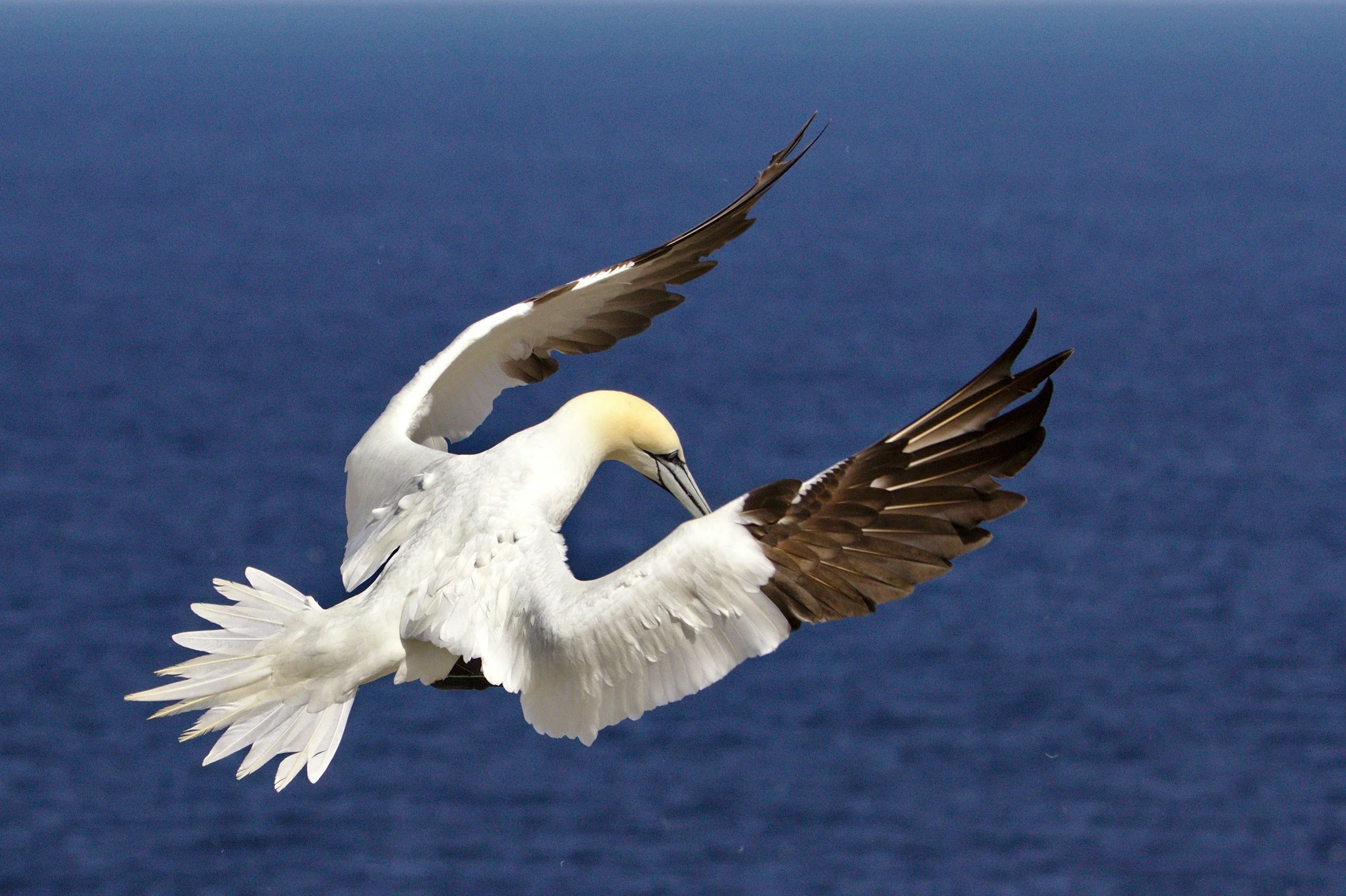
Northern Gannet. Flock-feeding gannets crowd the mouth of the Chesapeake in December and January.
Stomach studies of the large striped bass feeding alongside them show the same thing on the menu: peanut menhaden.
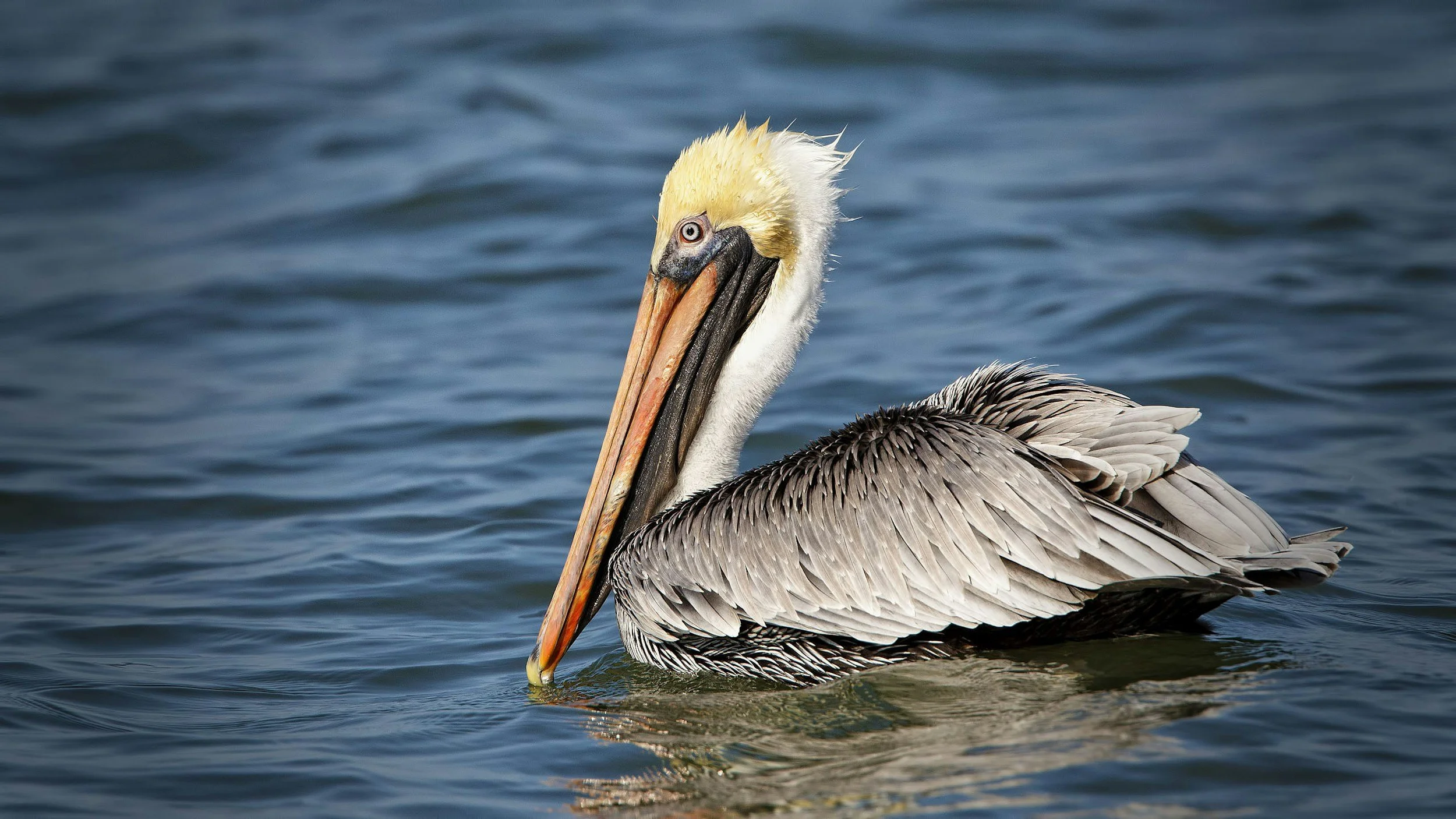
Brown Pelican. Breeding colonies at Holland Island in Maryland, Shanks Island in Virginia, and Core Sound in North Carolina feed their chicks large quantities of one- and two-year-old menhaden.
“These five bird species’ consumption of menhaden serves as a biomonitor for the entire coastal ecosystem, where unharvested menhaden perform profound ecological services for birds, fish, and humans alike.”
Spitzer, Poole, and Bierregaard, letter to the Atlantic States Marine Fisheries Commission, 2015.
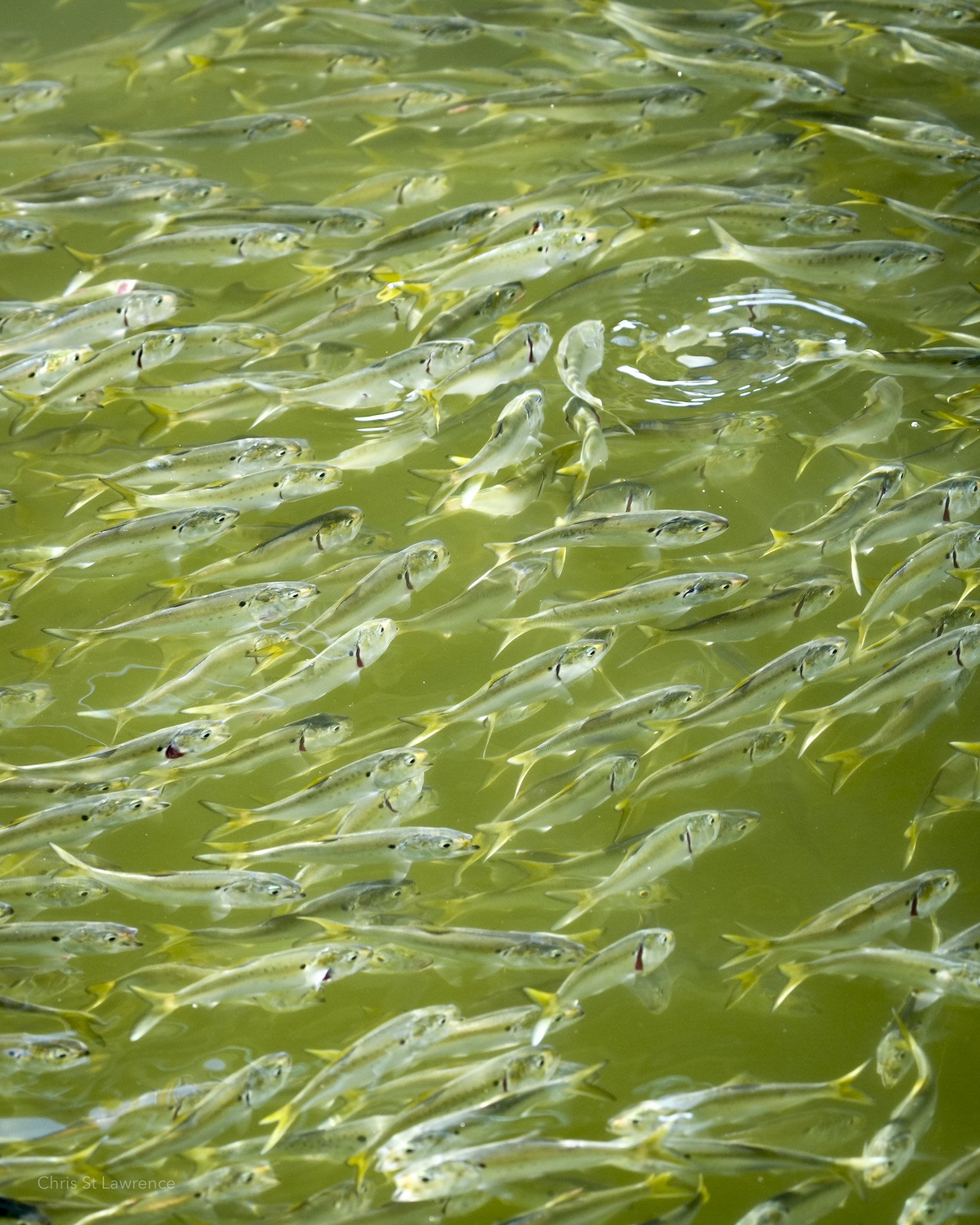
And it does not stop at birds. Humpback whales, dolphins, striped bass, bluefish, and weakfish are all chasing the same schools. Over the past two years, more than 200 people have written to this page connecting whale sightings to the same bait that the ospreys depend on. When the bunker vanish from a stretch of coast, everything that eats them leaves with the fish, or starves waiting.
That is the fight MENHADENDEFENDERS has been in from the beginning.
Not one bird.
A whole coastal food web, held up by a single fish that is being pumped out by the shipload.

YOU ARE NOT IMAGINING THIS
MENHADENDEFENDERS is not the only group counting empty nests. Independent programs, in different states, run by different people, using different methods, are reaching the same conclusion.
If you want to check our work, start with theirs.
The Center for Conservation Biology (William & Mary and Virginia Commonwealth University). Bryan Watts’s team, the source of the 571-nest Chesapeake dataset and the 2026 study. ccbbirds.org
OspreyWatch. The international nest-monitoring platform, where volunteers from Maine to Florida log what is happening at individual nests. Anyone can join. osprey-watch.org
Conserve Wildlife Foundation of New Jersey. The New Jersey Osprey Project, twenty-plus years of statewide monitoring and banding. They describe osprey plainly as “a vital bioindicator of the health of our coastal ecosystems.” conservewildlifenj.org
Connecticut Audubon, Osprey Nation. 420 volunteer stewards monitoring more than 700 nests, and the reason we know what a healthy year still looks like. ctaudubon.org
Delaware DNREC Osprey Monitoring. State program feeding data into the coastwide picture. dnrec.delaware.gov
The Virginia Osprey Foundation. Colonial Beach, Virginia. Science, education, and advocacy, and host of the Virginia Osprey Festival. virginiaospreyfoundation.org
Chesapeake Bay Foundation. Carrying the menhaden management fight at the Commission. cbf.org
Barnegat Bay Partnership. Regional monitoring and stewardship on the New Jersey coast. barnegatbaypartnership.org
And then there is you. We went back through nearly two years of comments on our Facebook page, more than 11,000 of them(!), and sorted by theme. 190 separate reports of ospreys not fishing, abandoning nests, or failing to feed young. 280 reports of adult menhaden simply not showing up where they always have.
Different states. Different rivers. People who have never met, with no reason to compare notes, over years, describing the same thing.
That is not anecdote. That is a dataset. Keep it coming.
THE LAST OSPREY
Filmmaker William McKeever, author of Emperors of the Deep, spent this crisis behind a camera. The result is The Last Osprey, a documentary about what is happening in the Chesapeake and why.
The festival synopsis does not soften it.
Ospreys in the Chesapeake Bay are facing the greatest threat since DDT. Osprey chicks are starving in the nest due to lack of food. The culprit, in the filmmaker’s words, is overfishing of menhaden.
The film has screened at the Chesapeake Bay Foundation’s Brock Environmental Center, at the Richmond International Film Festival, and at the Ice House in Colonial Beach, Virginia.
Trailer, 1:18. Watch the full 29-minute film free
on Red Coral Universe.
NEW JERSEY ALREADY SAID THIS MATTERS
New Jersey's State Wildlife Action Plan lists both Atlantic menhaden and osprey as Species of Greatest Conservation Need.
That designation restricts nothing. No boat stops fishing because a species appears on that list. What it establishes is priority, funding eligibility, and a set of actions the state has committed to carry out.
Look at what the state committed to for osprey. Under Actions, at the highest priority level, statewide:
“Monitor species that are essential to supporting healthy populations of SGCN to ensure they occur in sufficient abundance and distribution for functionally dependent SGCN (such as horseshoe crab spawning supporting migratory shorebirds, and fishery stocks supporting ospreys, eagles, and other piscivores)”
One honest note. The same state profile lists the osprey population as “stable.” Adults still come back each spring, and the nests are still occupied.
That is not the measurement that matters.
A pair can hold a territory for a decade and raise nothing. On the Navesink this summer, 22 chicks hatched and only three lived to fly. Counting the adults tells you the birds are still showing up. Counting the fledglings tells you whether there will be any birds to show up in ten years.
The commitment is on paper. The fish are not in the water.
That gap is where this fight happens.
FUND THE FIGHT
Menhaden Defenders is a small operation going up against an industrial fishery owned by one of the largest seafood companies on earth. They have lobbyists, a public relations budget, and a permanent seat at every meeting.
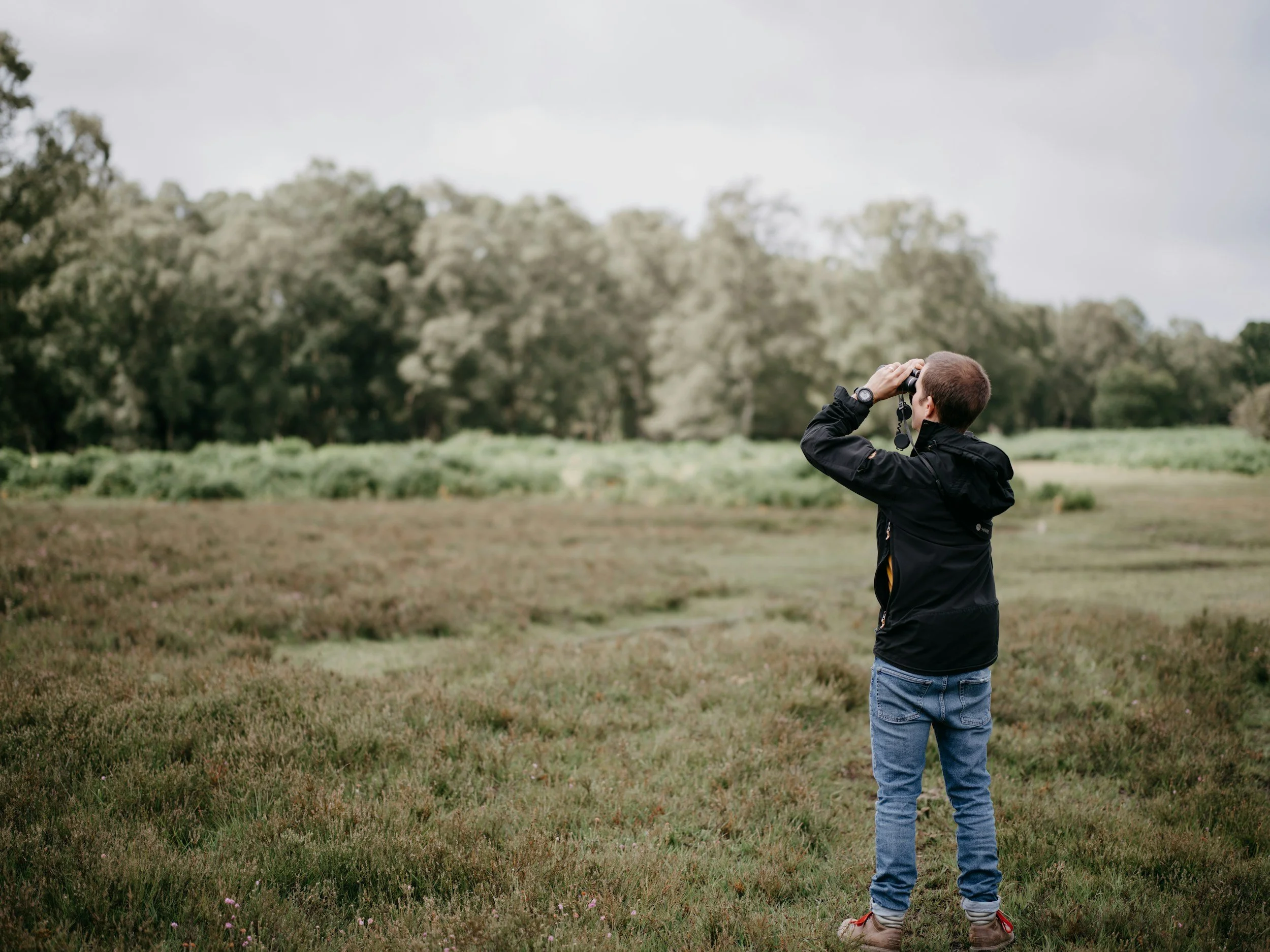
We have volunteers with binoculars, a boat, and a record of showing up.
Every dollar goes into the work on this page:
Counting nests on the Navesink and the Shrewsbury;
Tracking eagles on the Raritan;
Testifying at Atlantic States Marine Fisheries Commission hearings;
Organizing public comment when the catch limits come up for a vote;
Building the coalition of fishing, birding, and conservation groups pushing for a lower harvest; and,
Getting films like The Last Osprey in front of the people who decide.
None of that is glamorous. All of it is why the 2012 harvest cap happened, and why the birds came back in the seasons afterward.
The ospreys, the loons, the eagles, the gannets, and the pelicans are all eating the same fish. They cannot lobby. They cannot testify. They cannot vote.
That part is on us. Help us keep doing it.
BECOME A DEFENDER
Join the chorus of American citizens advocating for:
Sustainable, equitable fishing practices
Protection of vital marine ecosystems
Transparent, science-based management
Preservation of coastal community heritage
By providing your email, you agree to receive occasional communications
from Menhaden Defenders and you agree to our terms and conditions.